 You can see it again
Under pressure people bring back shapes and positions long after the wording has gone.
Picture superiority · Shepard 1967, Standing 1973 Examers.io
 F5
F5The F5 Certified Solution Expert, Security certification validates your expertise in designing, maintaining, and troubleshooting security solutions built on F5 technology. It is for experienced engineers who can translate business and technical requirements into secure architectures using BIG-IP LTM, DNS, ASM, APM, AFM, and BIG-IQ. Earning this credential proves you can architect and articulate comprehensive security solutions across the entire application stack.
Content last reviewed 30 July 2026 · Up to date
What this certification covers, who it is written for, and what the exam itself looks like on the day.
What it validates, who it is written for, and the experience it assumes.
The F5 Certified Solution Expert, Security (F5-CSE, Security) certification is the highest level of F5's security track. It validates that you have completed the entire Security track and have demonstrated expertise not only in designing security solutions leveraging BIG-IP LTM, BIG-IP DNS, BIG-IP ASM, BIG-IP APM, BIG-IP Application Firewall Manager (AFM), BIG-IQ modules, IP Intelligence Services, WebSafe, and MobileSafe, but also in articulating the logic behind your designs and aligning those designs with technical, security, and other requirements.
This certification is for experienced professionals who can define security requirements based on technical and business needs, apply and modify security architectures utilizing F5 technology, and articulate the value of the solution. It also validates your ability to identify, analyze, and mitigate security incidents leveraging F5 technology as appropriate. Achieving this certification demonstrates that you can architect technical solutions to meet given business requirements and perform multi-module troubleshooting, possibly leveraging third-party tools.
This certification is for experienced security engineers, network architects, and solution experts who design, maintain, and troubleshoot F5-based security solutions. The minimally qualified candidate has experience defining security requirements based on technical and business needs, applying and modifying security architectures utilizing F5 technology, and articulating the value of the solution. You are comfortable identifying security threats and interpreting their potential business impact, designing solutions to mitigate those threats, analyzing anomalous data to recognize security incidents, and performing multi-module troubleshooting, possibly leveraging third-party tools. You have a strong working knowledge of IT security principles and field experience with F5 technology.
Field experience with F5 technology is essential, along with a strong working knowledge of IT security principles. Experience designing, maintaining, and troubleshooting F5 security solutions; Strong working knowledge of IT security principles; Familiarity with BIG-IP LTM, DNS, ASM, APM, AFM, BIG-IQ, IP Intelligence, WebSafe, and MobileSafe; Ability to identify security threats and design mitigation solutions
Every domain and objective F5 measures, with the weight they carry on the exam.
The official F5 exam outline · checked 30 July 2026 · See the source
Everything F5 publishes about sitting it, and nothing we inferred.
F5 Certified BIG-IP Administrator (F5-CA)
The path F5 lays out, how the credential is kept, and where to book.
Step-by-step path to F5 Certified Solution Expert, Security
Credential earnedF5 Certified Solution Expert, Security Expert level certificationThis certification is currently active and available. F5 maintains this certification to validate current skills and industry relevance.
Register for the exam through Pearson VUE, F5’s authorized testing partner.
Schedule your examVisit the official F5 certification page for exam policies and requirements.
View the official pageYour coach in the app reads what you have answered with the book closed and tells you one thing to do tonight. It will not count an answer you gave with the page open, and it will tell you when you are not ready.
See how the coach worksExam 401 is the capstone of the F5 Security track. You must first earn the F5-CA, F5-CTS LTM, F5-CTS ASM, and F5-CTS APM certifications before you can attempt Exam 401.
After the first failed attempt, you must wait 15 days. The second failure requires a 30-day wait, the third a 45-day wait, and the fourth a one-year wait. For the fifth failure or more, you must wait 90 days. Your retake count resets only when you pass the exam.
Yes, but you must do so at least 48 hours before your scheduled appointment. Rescheduling within 48 hours incurs a fee. You must make changes yourself; F5 Support, Pearson VUE, and Certiverse cannot process them for you.
You must bring two forms of valid, signed ID, one of which must be government-issued and include a photo. The name on your ID must match the name on your F5 Certified account.
The official exam page does not mention a hands-on or lab component. The exam is delivered as a proctored test at a Pearson VUE testing center.
This certification is designed for security engineers, network architects, and solution experts who design, maintain, and troubleshoot F5-based security solutions.
F5 does not publish a renewal model for this certification. The official page does not specify recertification options.
The exam is delivered at Pearson VUE testing centers worldwide. No regional restrictions are mentioned on the official page.
Every domain, every objective, and every concept F5 measures — each one written out.
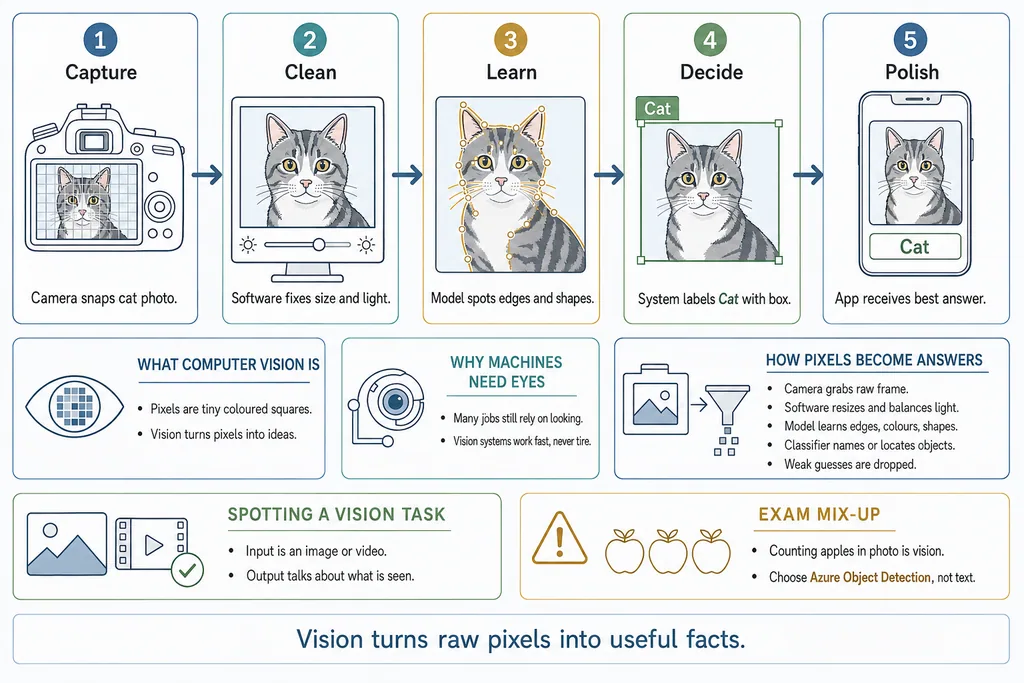
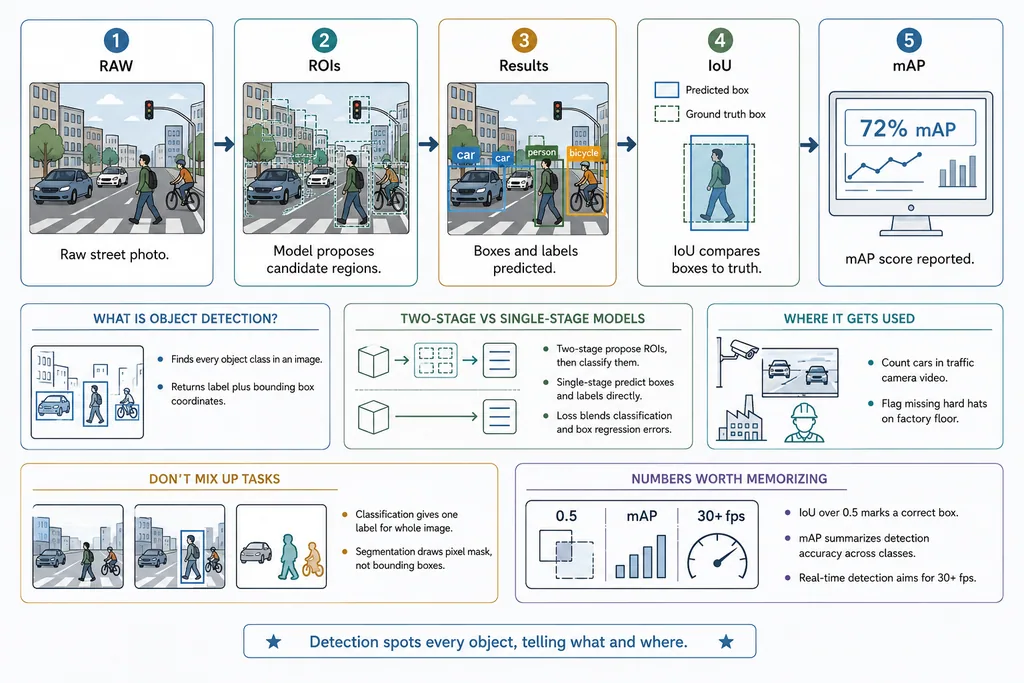
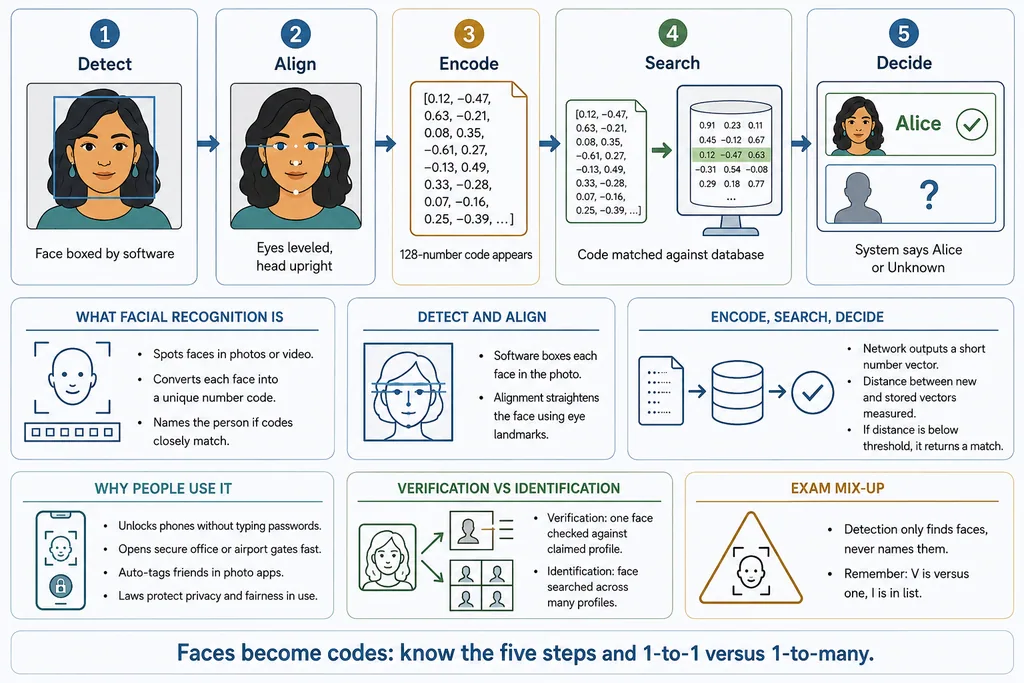
Every objective below is a page you can open and practise now, without an account.
The official F5 exam outline · checked 30 July 2026 · See the source
In front of every objective the practice pages are already there, free and without an account. This is one objective, opened.
22 questions on this objective, five to a page. Every range above is a real page, open now, with no account.
The curriculum tells you what is on the exam. Proving you know it is a different job — and it is the one the closed-book run does.
The whole bank is open. 5 questions to a page, every answer explained, and a discussion thread on each one.
Every objective, and every page range, is a link — so you can pick up exactly where you left off.
Short enough to finish, long enough to matter.
Not only which one is right — why the others are wrong.
Ask, answer, and vote. Every question has its own thread.
These are not trivia. Each one is written against a concept in the book, so when you get one wrong there is somewhere to go and find out why.
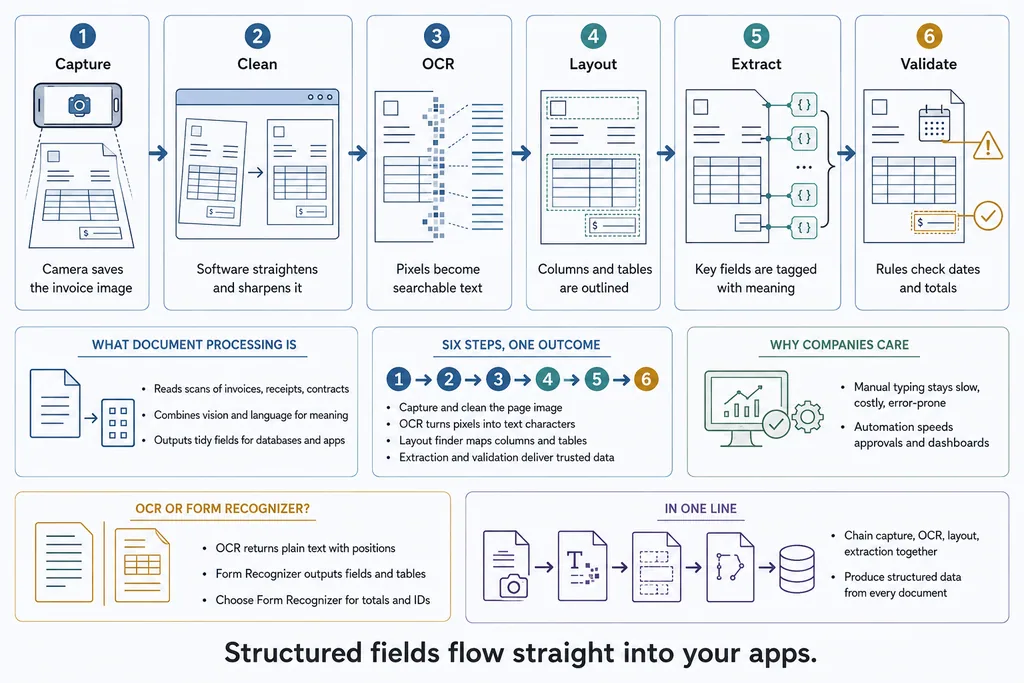
The pages shown here come from our AI-900 book — an example of how each concept is written in plain language and, where the idea needs one, drawn as a full page you can take in at a glance.
Three reasons, and each one is a real finding rather than a slogan.
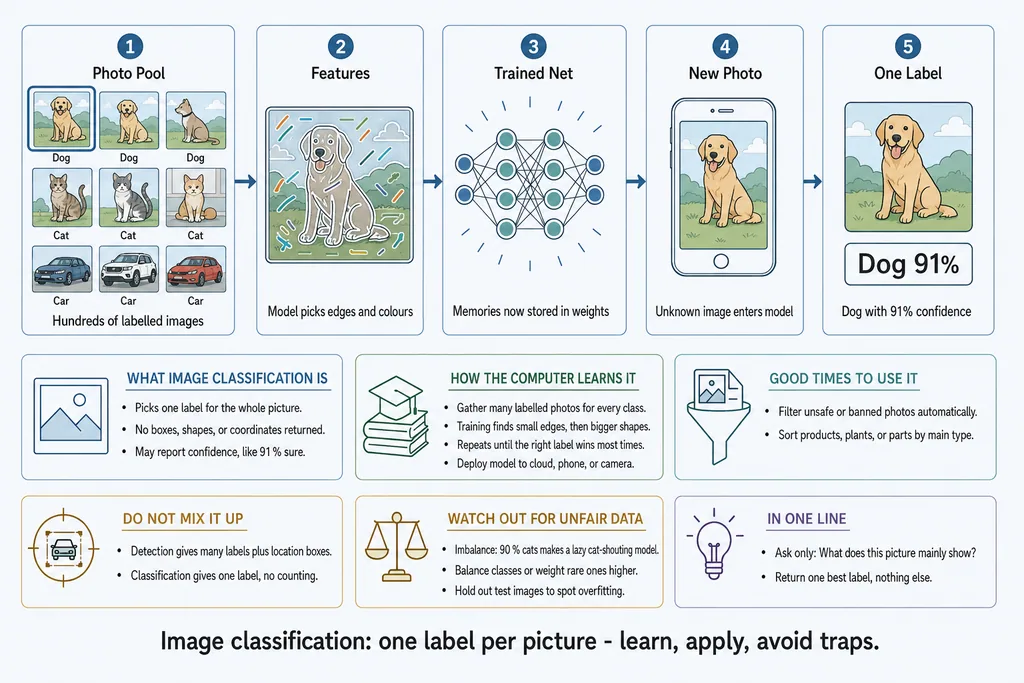
You can see it againUnder pressure people bring back shapes and positions long after the wording has gone.
Picture superiority · Shepard 1967, Standing 1973The whole idea at onceWhere it starts, what happens in the middle, what comes out, and the mistake to avoid.
Multimedia principle · MayerThe look-alikes sit togetherThe pairs the exam tests are drawn side by side, so the difference is seen, not told.
Dual coding · PaivioYou are never asked to read a poster here — only to see how one is built. After that, every other page is legible at a glance.
The idea as a sequence, followed with a finger before a word is read.
What it is, how the machine learns it, when it is the right tool.
The distinction the exam tests, given its own box instead of buried in prose.
The sentence to carry into the exam room.
This is the part that teaches. The illustration and the written explanation stay where they are while you work, so a scenario stops being a memory test and becomes something you can simply look at.
A smartphone uses AI to unlock when the owner looks at the camera. Which AI capability is being used?
The same questions come back with the book closed — that run is the one that counts. After it, your coach picks one thing for tonight, sized to the time you have, and brings pages back before you lose them.
Testing effect · Roediger & Karpicke 2006 · spacing effect · Cepeda et al. 2006
Straight from F5Where the exam is defined, scheduled and scored.
We link to them rather than repeat them, so nothing here goes stale behind them.
We build from the official skills outline, not from a summary of it — 17 objectives, 101 concepts written under them, and free questions against every one. When F5 changes the outline, this page changes with it.
That is the only question worth answering the night before, and no link answers it. You answer it by taking the questions with the book closed, and seeing what comes back.